by Neil Gaiman.
I read the graphic version of this, and liked it a whole lot. A kid grows up in a graveyard and the ghosts raise him. They have very distinct personalities so the young lad learns about his world through the ghosts.
Wednesday, February 13, 2019

Ollie's Odyssey by William Joyce

Although I never read anything by Joyce, luckily I took a chance on Ollie. I love this book! Ollie is a toy and he is discarded and finds his way through many trials and tribulations much like Odysseus. It is dark though, as many of his companions suffer greatly; they come from the scrap pile and even some real garbage come to life to help Ollie get back to his home and for a long time the journey is rough. His nemesis is a disgruntled toy who turns super evil because he was not chosen by any kids to take home. They have a big war, a lot of toy on toy violence, and its quite compelling.
Comics, a plethora, some not as good
I have read a lot of comics:
Essex County, by Jeff Lemire: a wonderful touching story of small town Canadiana with hockey. In some parts I teared up a little. Destined to become a classic.
Descender, Jeff Lemire: "One young robot's struggle to stay alive in a universe where all androids have been outlawed and bounty hunters lurk on every planet."
I liked it, but not sure if it is worth buying more. This title shows Lemire's range as does every new book by him, impressive and thoughtful writing.
Sweet Tooth, Jeff Lemire: genius, creative, weird, creepy. I love comics because of series like this.
V for Vendetta, by Alan Moore: A classic! I think Moore is the best writer for comics, since I like all his stuff. I like V because of the art too, all tiny an ddetailed, but the style is quite different from other comics, a little watercolour but deep and rich in texture. The historical references are nice for me as a reader interested in history. I read it when I was teaching gr 9 SS, so the part about the War of 1812, the Overture by Tchaikovsky, Guy Fawkes, and the English Revolution are all teaching points in V.
Swamp Thing, by Alan Moore: a thoughtful and sensitive portrayal of a monster. Also a graphic classic, see above.
Stitches, by David Small: great, painful, and troublesome. Small has written a tender and difficult comic about his life. Tender, because the style he chose is poignant considering the tragic nature of his life and relationship with his family. He had cancer when he was little and lost his ability to speak, but his family never told him as he went into the operation to remove his larynx. Stitches then, aside from the title, is a big reference to his loss, in that there are almost no words, -he can't talk. Its very good.
Arab of the Future, a graphic memoir: a childhood in the Middle East (1978-1984) by Riad Sattouf, is a frightening look at Riad's life when his Syrian father and French mother move to several different countries in Northern Africa and the Middle East. He witnesses the brutal nature of life in these countries as his dad takes on new work. It is worth a read for people who like real life comics, but not very happy.
Kill my Mother, by Jules Fieffer, is not worth the read despite having a famous author.
Locke and Key series, by Joe Hill is worth reading if you like weird stuff: "Subject: Tells of the Keyhouse, an unlikely New England mansion, with fantastic doors that transform all who dare to walk through them--and home to a hate-filled and relentless creature that will not rest until it forces open the most terrible door of all.."
So I liked it.
Saga series, by Brian Vaughan: I liked this one too but it is weird, with some odd alien sex and what not.
One Trick Pony by Nathan Hale: written for middle school aged kids, a very nice story about a future society where children are digging for treasure, artefacts, and useful stuff left behind by previous people, and running form some mech monsters. One of the kids finds a robot horse. Adventure ensues.
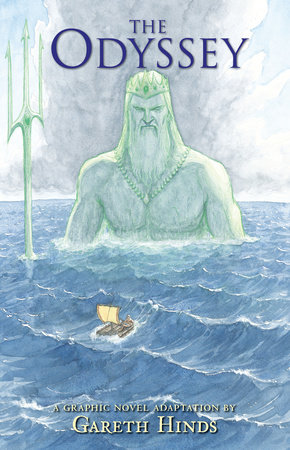
The Odysssey, by Gareth Hinds is a fairly thorough complete version in as much as a graphic could and should be. I enjoyed it a lot, and the water colour art is excellent, which helps to make the story come alive.
The Tick, by Ben Edlund: I love all things Tic including the old comic tv show, this book and the new Amazon live action version. Fun times with super, and not so super heroes, who are mostly trying to fit in and save the world.
Rust series, by Royden Lepp is so lovely. The sepia tones work well with this story, somehow as a time forgotten and re-told in nostalgic terms, but it is actually set in a future time. Rust may be good for younger kids, maybe gr 4 up only because there is a lot of death in it but no graphic depictions of horror or too much mayhem. Rust is a mysterious boy with human and android features, hard working and easy to get along with while he hides his true self from the farmer he is working for.
Blankets, by Craig Thompson: this is one of those early 'best list' graphics which has stood the test of time as a classic of the genre, unlike works by Daniel Clowes and Charles Burns. Blankets is a metaphor for things that comfort you, within relationships. I recommend this one for adults, since younger readers may not be ready for all that soft stuff.
Essex County, by Jeff Lemire: a wonderful touching story of small town Canadiana with hockey. In some parts I teared up a little. Destined to become a classic.
Descender, Jeff Lemire: "One young robot's struggle to stay alive in a universe where all androids have been outlawed and bounty hunters lurk on every planet."
I liked it, but not sure if it is worth buying more. This title shows Lemire's range as does every new book by him, impressive and thoughtful writing.
Sweet Tooth, Jeff Lemire: genius, creative, weird, creepy. I love comics because of series like this.
V for Vendetta, by Alan Moore: A classic! I think Moore is the best writer for comics, since I like all his stuff. I like V because of the art too, all tiny an ddetailed, but the style is quite different from other comics, a little watercolour but deep and rich in texture. The historical references are nice for me as a reader interested in history. I read it when I was teaching gr 9 SS, so the part about the War of 1812, the Overture by Tchaikovsky, Guy Fawkes, and the English Revolution are all teaching points in V.
Swamp Thing, by Alan Moore: a thoughtful and sensitive portrayal of a monster. Also a graphic classic, see above.
Stitches, by David Small: great, painful, and troublesome. Small has written a tender and difficult comic about his life. Tender, because the style he chose is poignant considering the tragic nature of his life and relationship with his family. He had cancer when he was little and lost his ability to speak, but his family never told him as he went into the operation to remove his larynx. Stitches then, aside from the title, is a big reference to his loss, in that there are almost no words, -he can't talk. Its very good.
Arab of the Future, a graphic memoir: a childhood in the Middle East (1978-1984) by Riad Sattouf, is a frightening look at Riad's life when his Syrian father and French mother move to several different countries in Northern Africa and the Middle East. He witnesses the brutal nature of life in these countries as his dad takes on new work. It is worth a read for people who like real life comics, but not very happy.
Kill my Mother, by Jules Fieffer, is not worth the read despite having a famous author.
Locke and Key series, by Joe Hill is worth reading if you like weird stuff: "Subject: Tells of the Keyhouse, an unlikely New England mansion, with fantastic doors that transform all who dare to walk through them--and home to a hate-filled and relentless creature that will not rest until it forces open the most terrible door of all.."
So I liked it.
Saga series, by Brian Vaughan: I liked this one too but it is weird, with some odd alien sex and what not.
One Trick Pony by Nathan Hale: written for middle school aged kids, a very nice story about a future society where children are digging for treasure, artefacts, and useful stuff left behind by previous people, and running form some mech monsters. One of the kids finds a robot horse. Adventure ensues.
The Odysssey, by Gareth Hinds is a fairly thorough complete version in as much as a graphic could and should be. I enjoyed it a lot, and the water colour art is excellent, which helps to make the story come alive.
The Tick, by Ben Edlund: I love all things Tic including the old comic tv show, this book and the new Amazon live action version. Fun times with super, and not so super heroes, who are mostly trying to fit in and save the world.
Rust series, by Royden Lepp is so lovely. The sepia tones work well with this story, somehow as a time forgotten and re-told in nostalgic terms, but it is actually set in a future time. Rust may be good for younger kids, maybe gr 4 up only because there is a lot of death in it but no graphic depictions of horror or too much mayhem. Rust is a mysterious boy with human and android features, hard working and easy to get along with while he hides his true self from the farmer he is working for.
Blankets, by Craig Thompson: this is one of those early 'best list' graphics which has stood the test of time as a classic of the genre, unlike works by Daniel Clowes and Charles Burns. Blankets is a metaphor for things that comfort you, within relationships. I recommend this one for adults, since younger readers may not be ready for all that soft stuff.
The Prince and the Dressmaker
By Jen Wang: also one of the Middle School graphics, but a little bigger and more substantial content wise, for me at least, than some of the others. I recommend this one for the age group. It has a lot of sequences with no words just images that really tell a good story. The twist is that the Prince likes to wear girls' fancy dresses, and goes out in public with the dressmaker, who of course knows his secret. He faces his parents who are trying to set up a princess for him to marry, and finally he comes out, although his sexual preferences end up being less obvious than at first, making the story even more interesting.

by Jason Shiga


Jason Shiga is a talented story teller and visual artist. I ordered Meanwhile because it was on someone's Middle School 'best of' list for graphics. It is super creative and interesting from a stylistic point of view, -just the way the book is put together is very nice, a great tactile experience. It is a choose your own adventure type, but you must pay attention to the story or you may get lost in the different lines of the plot. Its good.
Demon is very very different! It is a book which appeals to the teenage boy in some of us. I was repulsed and fascinated, and I also laughed a lot. I knew I could never put it out on the school library bookshelf, so I sent it back to Amazon. The premise is that a man tries to commit suicide, but keeps waking up in someone else's body, until he realizes that he is a demon. It is a series and I really have this (guilty pleasure) desire to read more, but its too dark and dirty for me to have the book in my hands because I fear what others may think of me. How's that for an endorsement to pique your curiosity?
Bookhunter is very cool if you are a librarian, but would probably be far less interesting if you are a civilian. Shiga either has some background in library work, or did a lot of nerd research to get this right. He uses terms such as Tattle Tape, which is great if you are on the inside but meaningless if not. Is funny for me because it is a somewhat frivolous detective story about recovering a stolen rare book, with guns and cops.
Monday, February 11, 2019
Wolf by Wolf
Wolf by wolf, by Ryan Graudin: I hated the writing style of the one, but really liked the premise; the Nazis have won the war, -so what does the world look like now? Bad, as you may have guessed. The protagonist in this YA book is Yael and she is a Jew who was experimented on in a death camp. The Dr. injected her with so many chemicals that she became a shape shifter and now covertly poses as other females to fight for the resistance. The writing style is that new obnoxious. Way of using no. Sentences in order to add. Emphasis. Please stop. Write a fang sentence so I don't puke. It works better.

"The year is 1956, and the Axis powers of the Third Reich and Imperial Japan rule. To commemorate their Great Victory, they host the Axis Tour: an annual motorcycle race across their combined continents. The prize? An audience with the highly reclusive Adolf Hitler at the Victor's ball in Tokyo."
"The year is 1956, and the Axis powers of the Third Reich and Imperial Japan rule. To commemorate their Great Victory, they host the Axis Tour: an annual motorcycle race across their combined continents. The prize? An audience with the highly reclusive Adolf Hitler at the Victor's ball in Tokyo."
Subscribe to:
Comments (Atom)